Seeing the ‘Hop Pickers’ on Sansome Street for the first time in late 2011 was one of those half dozen or so life-changing (or life-defining or life-affirming) experiences we all get at various times. In this instance, it was a ‘perfect moment’ combining aesthetic shock and a recognition of something timeless. I didn’t know then that the work was by William Forsyth, who had some connection with C. Bruce Allen’s School for Artist Workmen (a forerunner of the Royal College of Art) and who had more than likely drawn George Gilbert Scott’s plaster casts of European Gothic architectural ornament in the associated Architectural Museum (a forerunner of the Victoria & Albert Museum) at 9 Bridge Street, Cannon Row, in Westminster. 125 years later, as a student at the RCA in the mid-1970s, I had drawn the same plaster casts in the Cast Courts at the V&A. I may not share a bloodline DNA with William Forsyth, but we do share something timeless which is to do with art and drawing.
To know something of an artist as an individual helps with questions about ‘what’ and ‘when’, and to know something of their personality and lived experience can help build an understanding of ‘why’. But this approach assumes that ‘Artists make Art’.
The line of thought I follow [from late 18th century Romanticism to Ardengo Soffici’s ‘Picasso e Braque’ (1911) through Vladimir Markov’s ‘The Principles of Creativity in the Plastic [Visual] Arts: Faktura’ (1914), and on to later thinking by artists like Barnett Newman and Ad Reinhardt [1], etc.] is that ‘Art makes Artists’. This is to see Art as rhizome or, even better, as Indra’s net where Art is ‘infinite and spreads in all directions with no beginning or end’, and where each Artist is one jewel reflecting the light of another artists. Instead of questions of ‘what’ and ‘when’ and ‘why’, we become more focused on issues of relationship and connection.
William Forsyth’s most important relationships seem to have come early in his life. He was always a ‘man of Pugin’, and still championed A.W.N. Pugin’s Gothic Revival in his old age [see his letter to the Worcestershire Chronicle, 21.03.1903]. And he had a long term working relationship with the ‘decorative art painter’ George E. Fox, which connects him to ‘Crace & Co’ (Pugin’s high-end London-based decorators) and the 2nd Earl Somers at Eastor Castle.
In the 1860s, William Forsyth’s closest connections were to the architects Edmund Wallace Elmslie in Great Malvern (originally Elmslie, Franey & Haddon, 43 Parliament Street, Westminster, and not far from the Architectural Museum at Cannon Row) and John Gibbs (of Oxford).
By the 1870s, though, William Forsyth was in the business of art and operating out of his ‘Monumental Studio’, at 5 and 6 Tythings, in Worcester, as an architect, sculptor, decorator, furniture maker, stained glass artist, designer and builder. By 1871 he was employing “12 Men & 3 Boys.”
A bigger view connects William Forsyth, via Pugin and William Morris’ socialism, to Morris’ student the architect and urban designer (Richard) Norman Shaw RA (one time partner of William Eden Nesfield), to Shaw’s Chief Clerk W.R. Lethaby who was highly influential as architect, architectural historian, teacher, and educationalist (Central School of Arts and Crafts and the Royal College of Art) and also advocate for A. K. Coomaraswamy’s ‘well-doing/well-making’ [2], all of which informed the programme of the Bauhaus when it opened in 1918 in Weimar, Germany, which then in turn influenced the training of architects who led on the post-War rebuilding of British cities (like Coventry but not Worcester) and, of course, artists of my generation.
Notes:
1. There is just one truth in art, one form, one change, one secrecy. / There is just one direction, one directionlessness, one size, one sizelessness, one form, one formlessness, one formula, one formulalessness, one formulation. / Secret principle, one form, continuous connection in time, where to cut, cleavage? Artist, one who works upon forms and whom forms work upon…
– Ad Reinhardt: ’THERE IS JUST ONE PAINTING (Art-as-Art Dogma, Part XII)’, Artforum (New York), March 1966.
2. It has sometimes been asked whether the “artist” can survive under modern conditions. In the sense in which the word is used by those who ask the question, one does not see how he can or why he should survive. For, just as the modern artist is neither a useful or significant, but only an ornamental member of society, so the modern workman is nothing but a useful member and is neither significant nor ornamental. It is certain we shall have to go on working, but not so certain that we could not live, and handsomely, without the exhibitionists of our studios, galleries, and playing fields. We cannot do without art, because art is the knowledge of how things ought to be made, art is the principle of manufacture (recta ratio factibilium), and while an artless play may be innocent, an artless manufacture is merely brutish labor and a sin against the wholesomeness of human nature; we can do without “fine” artists, whose art does not “apply” to anything, and whose organized manufacture of art in studios is the inverse of the laborer’s artless manufacture in factories; and we ought to be able to do without the base mechanics “whose souls are bowed and mutilated by their vulgar occupations even as their bodies are marred by their mechanical arts.”
– A. K. Coomaraswamy | A Figure of Speech, or a Figure of Thought?, 1946 (1972)
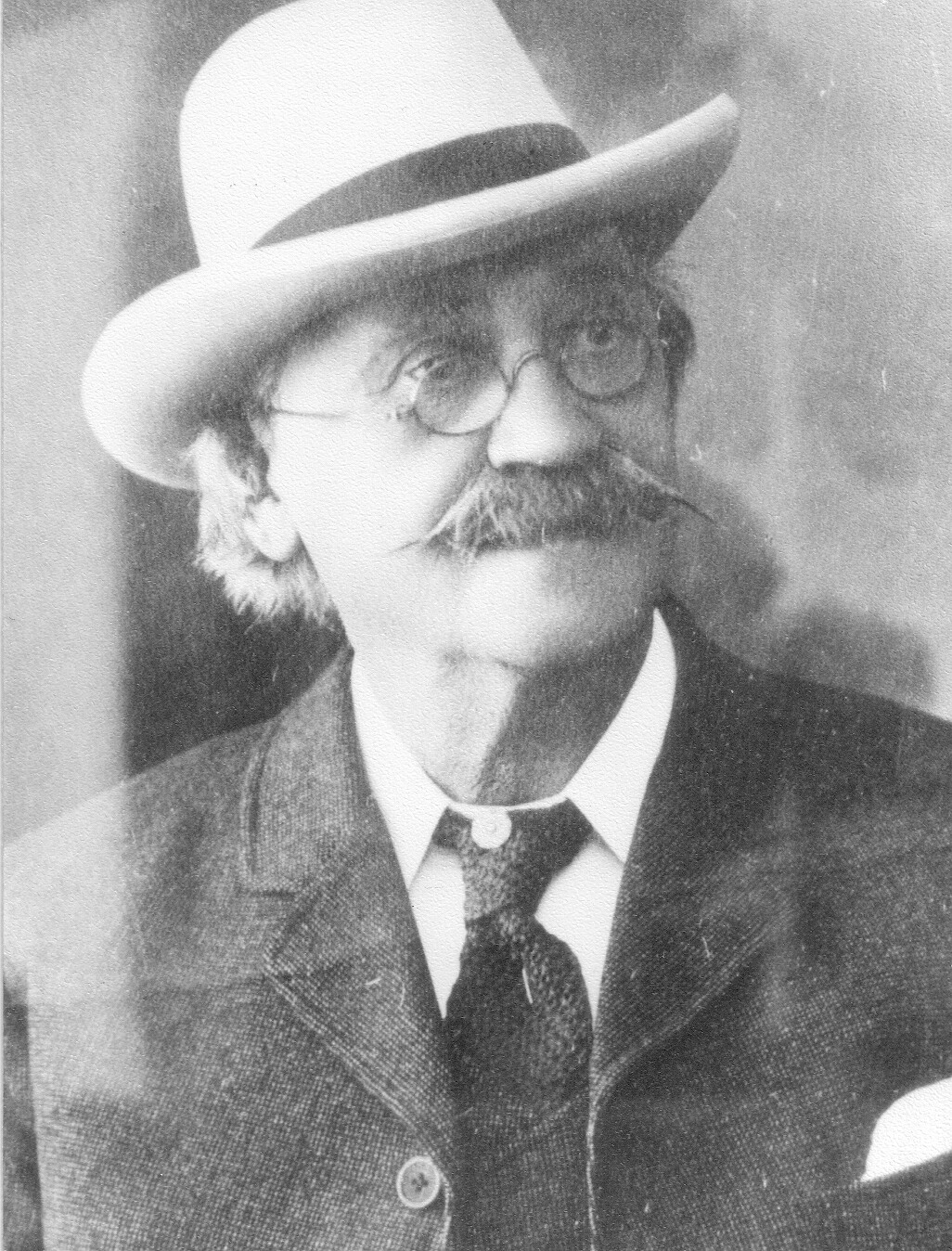
 William Forsyth 1833 - 1915